Both in and into are prepositions, words that link nouns, pronouns, and phrases to other words in a sentence. But in and into are not interchangeable.
To begin:
In indicates position or location:
She walked in the garden. (She was already inside the garden, walking.)
The preposition into describes movement or direction:
She walked into the garden. (She was somewhere else and then she entered the garden.)
The thing is, in gets used instead of into when it shouldn’t.
You might hear something like:
She ran in the classroom, late as usual.
When they probably mean:
She ran into the classroom, late as usual.
In indicates location, so in the first example, she would already have been in the classroom, running.
Into indicates movement, so in the second example, she would have entered the classroom running.
Here are a few other sentence pairs for comparison:
Dad poured coffee in his cup. (So Dad was standing or sitting inside the cup, pouring coffee.)
vs.
Dad poured coffee into his cup.
Alan walked in the ocean. (He was already in the ocean, walking.)
vs.
Alan walked into the ocean. (See below.)

He screamed in my ear. (This would require him to be inside your ear, screaming.)
vs
He screamed into my ear. (See below)

And my favorite:
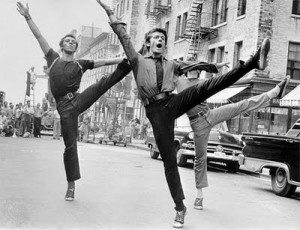
“We were dancin’, dancin’ in the street…”
vs
We were dancin’, dancin’ into the street.
Now that everything above is completely clear, there are some other uses of in and into I feel obligated to mention:
Into: Since sometime in the ‘60s or thereabouts, into started to mean “interested in,” “likes a lot,” etc.: “He’s really into you.” I imagine this is a preposition.
In: This little word is a preposition, but it also serves as an adverb, an adjective, and a noun.
Adverb: If in has an object, it’s a preposition. If not, in is an adverb.
He sat in the chair. (Chair is the object so preposition)
He came in and sat down. (No object for the in, so that one’s an adverb.)
As an adjective:
Using bitcoin was the in thing to do.
As a noun:
They had no in, so they didn’t get invited to the gala.
And lastly in to:
The sentence below contains something called a verbal phrase, basically two or more words that act as a single verb.
We stepped in to look at the room.
(In is partnered with stepped, so stepped in is a verbal phrase. To look is an infinitive. Can’t be separating those!)
Thank you to the following sites for images and assistance:
https://www.videoblocks.com/video/male-walking-into-ocean-in-suit-1bt4vmm
http://incedogroup.com/blog/communicating-effectively-focus-intentions-talk-gets-ugly/
https://simple.wikipedia.org/wiki/Preposition
Dancing in the Street Lyrics from Martha and the Vandellas, 1964, Gordy Recordsß
JL44 blends ancient dice luck with modern tech for Filipino players; check out jl44 games now! Great PAGCOR safety, GCash speed, and 24/7 Tagalog support make this a must-try platform.
Just hopped into Sprunki Cruel Sinda and the vibes are fire! No cap, the soundtrack is one of the best I’ve heard in a mod. GG to everyone involved!
As someone who’s played many Sprunki mods, Sprunki Cruel Sinda finally nails the difficulty curve. The new mechanics add strategic depth without being overwhelming. GG to the devs!
As a long-time Sprunki fan, I appreciate the polish in Sprunki Cruel Sinda. The sprite work is cleaner and the controls feel tighter than previous versions. Worth the grind!
Spinph5 keeps me coming back! The games are addictive and the platform is pretty smooth. Just be smart with your bets and good luck! You will find interesting things in spinph5
Love this clarification!